There is a moment, usually somewhere around your third or fourth trip to the Algarve, where the thought shifts from “this is a lovely holiday” to “could we actually live here?” The weather helps. So does sitting outside in February eating fresh fish for a fraction of what it would cost back home. But the gap between daydreaming about it and actually doing it is where most people get stuck.
Moving to the Algarve from the UK is a bigger project than it used to be. The rules changed after Brexit, the logistics are more involved than a domestic move, and there are decisions to make that you will not find on a tourist information website. This guide is designed to help you think through the practical side: where to live, what paperwork to expect, how to get your belongings there, and the things people wish they had known before they made the move.
Why Are So Many British Families Moving to the Algarve?
Portugal as a whole has become one of the most popular destinations for British expats, but the Algarve specifically offers a combination that is hard to match elsewhere in Europe:
- Climate
Mild winters rarely dipping below 12°C and warm summers averaging around 28°C, without the extreme heat you get further into Spain. The region enjoys more sunshine than almost anywhere else in Europe.
- Cost of living
While property prices have risen in recent years, the Algarve remains more affordable than the Lisbon or Porto metro areas, and significantly cheaper than the south of France or the Balearics. Day-to-day costs such as groceries, dining out, and utilities are noticeably lower than the UK average.
- Healthcare
Portugal’s public health system is accessible to residents, and the Algarve has a good spread of private clinics and hospitals, many with English-speaking staff. The Hospital Particular do Algarve group has facilities in Faro, Portimão, and Gambelas.
- Established expat communities
Towns like Lagos, Tavira, Albufeira, and Loulé all have well-established British communities with social groups, English-speaking services, and familiar amenities. You are not arriving somewhere untested.
- Accessibility
Faro Airport has year-round direct flights to most major UK airports, with a flight time of under three hours. Getting back for visits, family events, or work is straightforward.
Where in the Algarve Should You Live?
The Algarve is not one place. It stretches from the Spanish border in the east to the dramatic cliffs of Sagres in the west, and the character changes significantly as you move along the coast.
- Lagos and the Western Algarve tend to attract people looking for a more laid-back, less touristy feel. Lagos itself is a working town with a marina, independent restaurants, and a year-round population rather than a seasonal one. The surrounding villages like Burgau, Praia da Luz, and Barão de São João offer quieter rural living within easy reach of the coast.
- The Central Algarve around Albufeira, Vilamoura, and Quarteira is the most developed stretch, with the widest range of restaurants, golf courses, and international schools. It is also the busiest in summer. If nightlife and resort-style amenities matter to you, this is where you will find them.
- The Eastern Algarve around Tavira, Olhão, and the Ria Formosa lagoon is quieter, more authentically Portuguese, and generally more affordable. Property here tends to offer better value, and the pace of life is slower. Tavira in particular has become popular with British expats who want the Algarve lifestyle without the crowds.
What Paperwork Do You Need to Move to the Algarve After Brexit?
Since the UK left the EU, moving to Portugal is no longer as simple as packing up and going. You will need to sort out residency, and your belongings will need to clear customs on both sides of the journey.
Do You Need a Visa to Move to the Algarve?
Most British people relocating to the Algarve will need a D7 visa, which covers retirees, remote workers, and anyone with a stable income who does not need Portuguese employment. The application is made through the Portuguese consulate in the UK before you travel, and requires proof of income, accommodation, and health insurance. Once in Portugal, you register with your local câmara (council) and apply for a residence permit through SEF or AIMA.
What Is a Portuguese NIF and Why Do You Need One?
You will need a Portuguese NIF (Número de Identificação Fiscal) for almost everything: opening a bank account, signing a rental contract, setting up utilities, and importing your belongings. You can apply for one through the Finanças office or via a fiscal representative before you arrive.
What Are the Rules for Importing Your Belongings?
This is the part that catches people out. Post-Brexit, your household goods are crossing an international customs border in both directions, and Portugal’s tax authority (Autoridade Tributária) requires a specific set of documents before anything clears. The rules around duty-free import have conditions attached, and the inventory they expect is detailed, not a summary of “boxes of kitchen stuff,” but an item-by-item list.
Getting this wrong does not just cause delays. It can mean your belongings sitting in a warehouse racking up storage charges while paperwork is corrected, or duty being applied to items that should have been exempt. If you take one thing from this guide, let it be this: choose a removal company that handles European relocations regularly and knows the Portuguese customs process first-hand, not one that is figuring it out as they go.
Still confused? You can call us on 01925 630441 or contact us so we can guide you directly.
Getting Your Belongings to the Algarve
This is the part most people underestimate. A flight to Faro takes under three hours, but your furniture, appliances, and the rest of your household cannot go in the hold.
When choosing a removal company for an Algarve move, the single biggest thing to look for is whether they have their own presence in Portugal. Many UK companies will collect your belongings, drive them to a port or depot, and then hand them over to a local contractor you have never spoken to. That is where communication breaks down, customs paperwork gets muddled, and delivery dates slip.
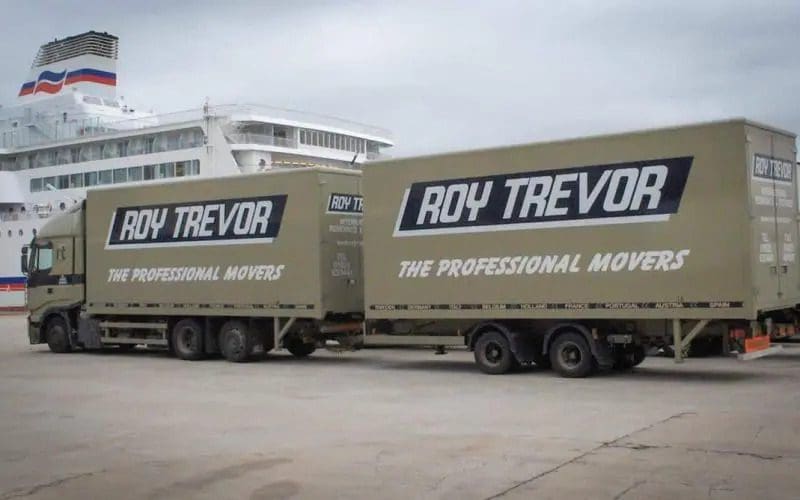
At Roy Trevor, we do things differently. Our sister company, AIM Removals Portugal, operates its own depot in Lagos, right in the heart of the Algarve. That means there is no handoff. The team coordinating your move in the UK is working directly with the team receiving your belongings in Portugal. It is one conversation, not a chain of subcontractors.
Whether you are shipping a full household or just the essentials to get started, our Portugal removal service is built around flexibility. Full loads go direct. Smaller shipments can travel as a part-load, sharing vehicle space with other families heading to the same region, same level of care, lower cost. And everything is professionally export-packed before it leaves your UK address, because 1,500 miles of road is a long way for a badly wrapped dining table.
What Happens If Your New Property Is Not Ready?
Timelines rarely line up perfectly on international moves. Your buyer in the UK might complete before your Portuguese purchase does, or renovations at the new place might overrun. Either way, you need somewhere safe for your belongings in the gap.
Think about storage at both ends. In the UK, you might need somewhere to hold everything between leaving your property and the removal vehicle departing, we have secure container storage across Cheshire for exactly this. In Portugal, the AIM depot in Lagos can hold your shipment until your new place is ready, so you are not paying for a delivery date that does not work.
And if you are keeping a foot in both countries, holding onto some furniture in the UK while you test the waters, long-term storage and self-storage units mean you do not have to make every decision at once.
Practical Tips from People Who Have Done It
- Visit in winter before you commit
The Algarve is beautiful in July, but you need to know what January feels like too. It rains more than you think, and some areas feel very quiet out of season.
- Rent before you buy
Spend at least six months renting in your chosen area before committing to a purchase. What looks perfect on a viewing trip can feel very different when you are living there full-time.
- Sort your NIF and bank account early
These are prerequisites for almost everything else. You can start the NIF process before you leave the UK.
- Learn some Portuguese
English is widely spoken in the tourist areas, but once you step outside of that bubble, even basic Portuguese makes a huge difference to how you experience daily life.
- Do not underestimate the emotional side
Moving abroad is exciting, but it is also a big adjustment. Factor in time to settle, build a routine, and find your community.
- Book your removal company early
European moves involve customs documentation, vehicle scheduling, and coordination across two countries. Three months ahead is ideal; two months is the minimum for a smooth process.
Ready to Make the Move?
If you are seriously considering the Algarve, the best thing you can do is start the conversation early. European moves have more moving parts than domestic ones — customs paperwork, vehicle scheduling, and coordination between two countries all take time to get right.
We have been helping British families make this move for decades, and our team in Lagos knows the Algarve as well as our team in Warrington knows Cheshire. Give us a call on 01925 630441 or request a quote online, even if you are still in the early stages. We are happy to talk through the practicalities and help you plan, no commitment needed.